Engine Dynomometer
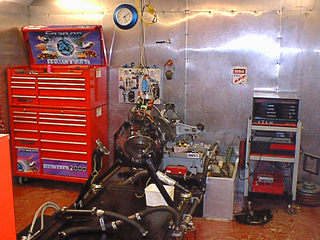
Dyno Details
The dyno is a water fed hydraulic engine brake that is used to apply load to the engine by way of a direct drive propeller shaft and then record the force exherted by the engine to try and overcome that load. The Schenck water brake is recognised as one of the most accurate torque measuring systems available and although a little dated in it's outward design is capable of accurate, repeatable measurements up to about 350BHP at 7000rpm. The dyno has two purposes. The first is to give us a test bed to identify faults with incoming engines. The second is to provide an accurate power measurement system to give reference data for the modifications we perform on the engines. The dyno does also provide a start point for engine mapping.
Data Aquisition
In order for the readings from the dyno to be of any use we need to collect the data from various sensors around the engine and store them for reference and inspection later. We store water temperature, oil temperature and pressure, dyno torque, individual exhaust temperatures, atmospheric pressure, relative humidity, induction air temperature, engine exhaust gas Lambda (air fuel mixture in exhaust gas) to mention only a few. All of this data is then absorbed by the resident computer and reports and graphs produced to show the results. The main advantage of this method is the speed with which we can make an alteration to the engine and then repeat the test to see what gains, or losses, the alterations produced This sort of back to back testing would be at best very difficult and at worst impossible in a vehicle on a rolling road.
Reports and Results
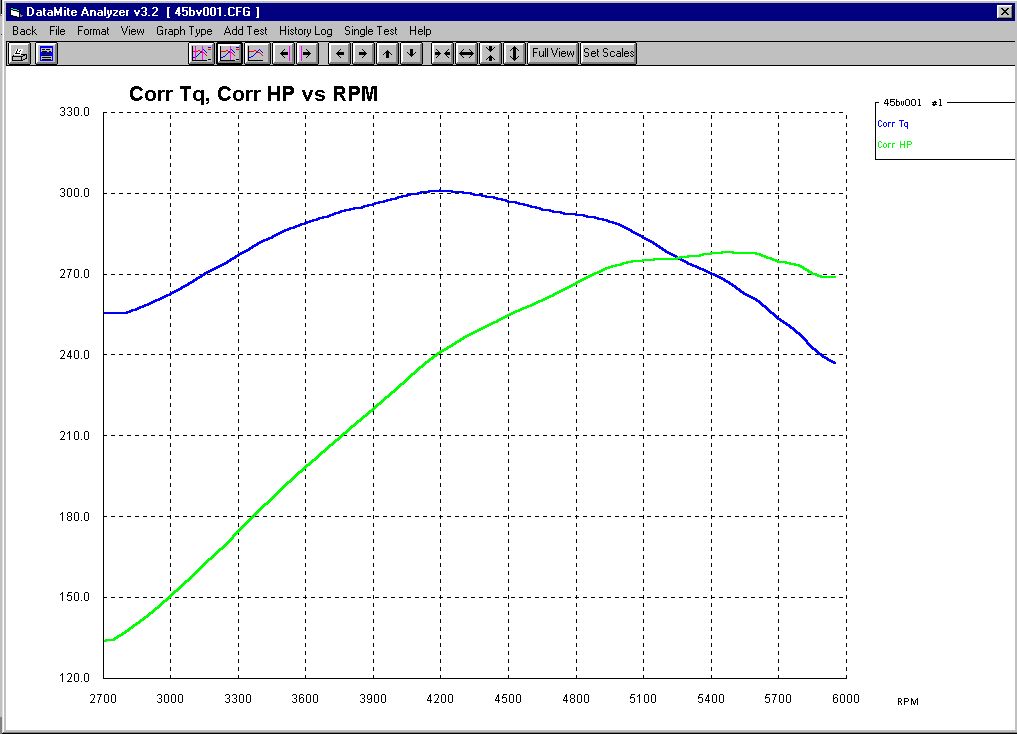
The Dyno graphs and reports produced by the data aquisition software are presented to our customers as a report 'pack' so that the engine has a record of it's performance to go along with it's engineers report of any work carried out. We try very hard to ensure that the figures produced by the dyno are accurate and the unit is regularly callibrated. It should be noted that many dynamometers, and particularly many rolling roads, rely on a degree of calculation to estimate a BHP figure, this water brake does not require this and the only corrections made are to allow for atmospheric conditions at the time of the test. We stress that the figures produced by this dynomometer are repeatable for each individual engine and we do claim to match the figures produced on any other dynamometer. To this end we have performed extensive 'baseline' testing of standard engines in their original configuration to act as a comparitive for the results 'post alteration'.
If you are purchasing a new engine you may wish for it to be dyno tested prior to delivery and this service is available at a fixed cost. If you have an engine that has been built elsewhere or self built we can also accomodate the dyno testing of your engine and will quote a cost upon request.

 |
|